
Front Runner Wolf Pack Pro and Fire Pit Bundle Guide
Table of Contents
- What the Front Runner Wolf Pack Pro and Fire Pit Bundle Actually Includes
- Front Runner Wolf Pack Pro: Storage That Earns Its Space
- The Folding Fire Pit: Flat-Pack Stainless That Nests Inside the Box
- Why Shoulder-Season Camping Gear Starts With Storage and Fire
- Portable Camping Fire Pit Limits: What It Is Not
- Who Should Buy the Bundle, and Who Should Skip It
- Packing the Bundle: A Pre-Departure Check
- Conclusion: Load It, Light It, Get Outside
- Frequently Asked Questions
Last Updated: October 5, 2026
What the Front Runner Wolf Pack Pro and Fire Pit Bundle Actually Includes
The Front Runner Wolf Pack Pro and fire pit bundle is a GTFO-exclusive pairing of a rugged overland storage box and a fold-flat stainless BBQ/fire pit that nests inside it.
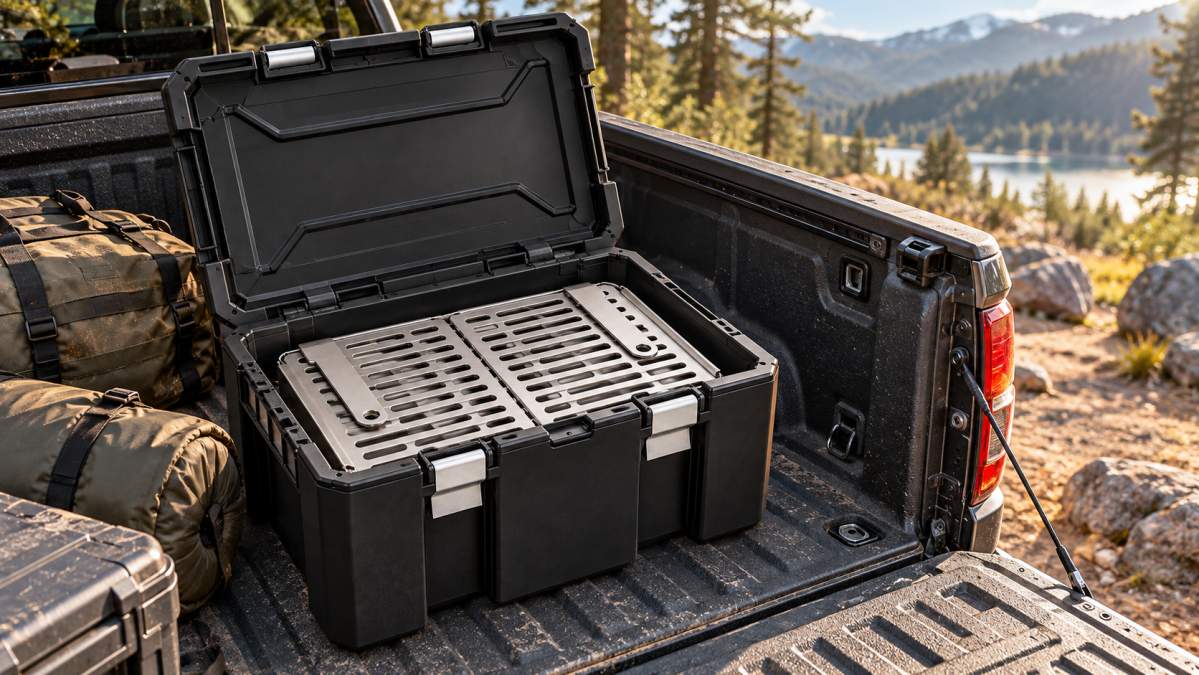
Rugged storage box and folded steel fire pit on an SUV tailgate in a sunlit forest clearing
Here's the honest pitch: most of us pack a storage box that holds stuff and a fire pit that rattles around loose in the cargo area.
The bundle contains:
- Front Runner Wolf Pack Pro storage box: the rugged, stackable overland storage box
- Front Runner fold-flat BBQ/fire pit: stainless, flat-packing, and sized to slide inside the Wolf Pack Pro
- A storage and fire solution that travels as one unit instead of two
Two pieces of gear solving the same problem from different angles: making camp work better in the shoulder seasons.
Front Runner Wolf Pack Pro: Storage That Earns Its Space
The Front Runner Wolf Pack Pro is a heavy-duty overland storage box built to stack, strap down, and survive a truck bed. If you've heard campers call a rugged box a "wolf box," that's nickname culture talking, not the product name. Here's what it actually does:
- Protects gear with a latching lid and a sealed body that keep dust, rain, and washboard-road grit on the outside. The lid isn't a tote lid that flips off at 70 mph.
- Organizes camp kitchen items, tools, recovery gear, or fire supplies into one grab-and-go unit. One box, one category.
- Stacks because the lid is flat and the footprint sits square on top of another box of the same family. You build vertical storage instead of a floor-level junk pile.
A common mistake is treating any plastic tote as a storage solution. Totes crack at the corners, lids fly off at highway speed, and nothing stacks worth a dang. The Wolf Pack Pro is built for vehicle life.
How the Wolf Pack Pro Protects, Organizes, and Stacks Your Gear
In practice, you can build a storage wall in the back of a truck or van: fire box at the bottom, kitchen box in the middle, soft goods on top. A shoulder-season weekend lives in three labeled containers instead of seventeen loose items.
A few fit-and-function details worth knowing before you buy:
- Measure your space first. The Wolf Pack Pro fits common vehicle cargo footprints, but "common" is doing a lot of work there. Check the height of your cargo opening and confirm the box clears your tailgate or hatch when stacked.
- Strap it, don't trust gravity. A loaded box becomes a projectile in a hard stop. Use tie-down points or a cargo bar.
- Keep the heavy stuff low. Fire tools, cast iron, and water go in the bottom box. Soft goods ride on top.
- Label by trip type, not by contents. "Camp kitchen" and "fire and tools" beat "misc" and "stuff."
If you're new to building a vehicle storage system, our cold-weather camping guide walks through the packing logic that makes a box like this earn its space.
The Folding Fire Pit: Flat-Pack Stainless That Nests Inside the Box
The Front Runner fire pit is a stainless folding fire pit that packs flat and nests inside the Wolf Pack Pro. That's the whole trick.
Here's why flat-pack matters. A portable camping fire pit that doesn't fold is one you'll leave at home.
Stainless matters for heat and weather. A fire pit lives a hard life of ash, rain, and repeated heat cycles.
Contained Fires and Campsite Cooking Where Permitted
A contained fire pit does two things a rock ring can't: it keeps the fire off the ground, and it gives you a cooking surface.
That matters more every year.
For cooking, a fold-flat fire pit with a grill surface or skillet-friendly top handles everything from a cast-iron sear to a slow coffee boil. It's not a full camp kitchen, but it beats a sad sandwich.
Why Shoulder-Season Camping Gear Starts With Storage and Fire
Shoulder-season camping gear bridges summer and winter trips, and it comes down to two problems: where your stuff lives and how you stay warm and fed when the sun clocks out early.
- Storage matters more because you're packing bulkier layers, blankets, and cooking gear
- Cooking matters more because cold-weather meals need heat and time
- Evening warmth matters more because the temperature drops the moment the sun does
The bundle addresses all three with one footprint. Storage, cooking, and warmth travel together, which is what you want when the forecast says 38 degrees and you're five miles up a forest road.
Portable Camping Fire Pit Limits: What It Is Not
A portable camping fire pit is a contained outdoor fire and cooking tool. It is not a heater, and it is not a permit to burn wherever you like. The limits:
- It is not a tent heater. Carbon monoxide from burning coals is a genuine hazard in any enclosed space. Keep fires outside, always.
- It does not override fire restrictions. Many jurisdictions ban all fires, contained or not, during high fire danger. Check before you go, every trip.
- It needs a safe surface. Don't set it on dry grass, duff, or a wooden picnic table. Use bare ground, gravel, or a heat-safe pad.
- It is your responsibility. You own the ash disposal, the water bucket, and the "is it actually out" check before bed and before you drive away.
Who Should Buy the Bundle, and Who Should Skip It
Most gear articles tell you everyone should buy everything. Here's the honest breakdown.
Buy the bundle if you fit any of these:
- Overlanders and vehicle campers who need storage and fire in one space-efficient package. The nesting design is the point: the fire pit lives inside the box.
- Shoulder-season campers who want cooking and warmth without hauling a full kitchen. A fold-flat fire pit plus a skillet covers more dinners than you'd expect.
- Truck, SUV, and van owners building a modular storage system who want the fire pit to have a home instead of rattling around loose.
- Weekend campers tired of loose gear rolling around the cargo area. One box that does two jobs beats two things that do one job each.
Skip it if:
- You only car camp at developed sites with provided fire rings and grills. You're paying for a fire pit you won't use.
- You already run a full camp kitchen and a dedicated fire setup you love. Don't fix what isn't broken.
- You rarely light fires and just want storage. Buy the box on its own and skip the fire pit conversation entirely.
- You're strictly a stove person, or you camp mostly during no-fire season. The box still earns its space; the fire pit doesn't.
We'd rather you buy the right thing once than the wrong thing twice.
Compatibility and Fit: What to Check Before You Commit
Before you decide, run these checks. They take ten minutes and save a return.
- Cargo height. Measure the opening of your tailgate or hatch. If you plan to stack two boxes, confirm the top box clears the opening when the lid is closed.
- Footprint. Check that the box sits flat on your cargo floor or drawer system without overhanging a lip. Overhang means wobble, and wobble means noise.
- Tie-down points. Confirm you have somewhere to strap the box. No anchor points means no safe load.
- Local fire rules. Contained-fire allowances vary by jurisdiction and change with drought and season. Check the current rules for your specific destination before every trip. The National Park Service fire safety guidance is a good starting point for public lands.
If you are... |
Buy the bundle? |
Why |
|---|---|---|
Vehicle-based overlander |
Yes |
One footprint for storage plus fire |
Shoulder-season weekend camper |
Yes |
Cooking and warmth in cold evenings |
Van builder with limited space |
Yes |
Nests together, packs flat |
Developed-site car camper |
Probably not |
Fire rings are usually provided |
Stove-only, no-fire camper |
Box only |
Storage still earns its space |
This bundle is a storage-and-fire system, not a heating system. It won't warm your tent, and it shouldn't. Treat it as an outdoor cooking and campfire tool.
Packing the Bundle: A Pre-Departure Check
Run this list before every shoulder-season trip.
- Fire pit folded and nested inside the Wolf Pack Pro
- Fire tools, lighter, and a backup lighter in the box
- Firewood or local firewood plan sorted (don't move firewood long distances)
- Water bucket or extinguisher packed for fire duty
- Current fire restrictions checked for your specific destination
The fire safety items are not optional. A bucket, a check of the rules, and a cold-ash habit keep a good trip from becoming a story you don't want to tell.
Conclusion: Load It, Light It, Get Outside
The hardest part of shoulder-season camping isn't the cold. The Front Runner Wolf Pack Pro and fire pit bundle removes a chunk of that friction by making storage and fire a single, stackable system.
At GTFOverland, we stock gear we'd load into our own rigs, and this bundle is exactly that: a storage box that earns its space and a fold-flat fire pit that actually travels.
Load it, light it, and get out there before the season turns.
Life happens out there.
Frequently Asked Questions
What comes in the Front Runner Wolf Pack Pro and fire pit bundle?
The bundle pairs the Front Runner Wolf Pack Pro storage box with a stainless steel BBQ/fire pit that folds flat. The fire pit nests inside the Wolf Pack Pro when packed, so the whole kit travels as one unit. Because it's a GTFO-exclusive bundle, check the current product listing for exactly what's in the box, since bundle contents can be updated. The idea is simple: one rugged box holds your gear, and the fire pit rides inside it instead of rattling around your cargo area loose.
Does the Front Runner BBQ/Fire Pit fit inside the Wolf Pack Pro?
Yes. The fire pit is designed to fold flat and nest inside the Wolf Pack Pro, which is the whole point of the bundle. That nesting is what keeps your cargo area organized: the fire pit isn't a separate loose item sliding around, and the box isn't empty space when you're not using it for other gear. If you're packing a tight rig, that combined footprint matters more than any single feature on either piece.
Is a folding fire pit allowed at every campsite?
No. Fire rules vary by location, season, and current conditions, and a portable fire pit doesn't exempt you from them. Many public lands restrict open flames during dry periods, and some campgrounds require fires only in provided rings. Before you go, check the specific rules for where you're camping, including any burn bans in effect. A contained fire pit helps, but following local fire restrictions and practicing fire safety is still your responsibility.
Can you use a portable camping fire pit inside a tent?
No, and this is the one rule to take seriously. A fire pit is not a tent heater, and burning anything inside a tent risks carbon monoxide poisoning and fire. Carbon monoxide is odorless and can build up fast in an enclosed space, which is why fuel-burning devices never belong in a tent. Use the fire pit outside, in a well-ventilated area, and keep tents, sleeping bags, and other gear at a safe distance from the flames.




Leave a comment